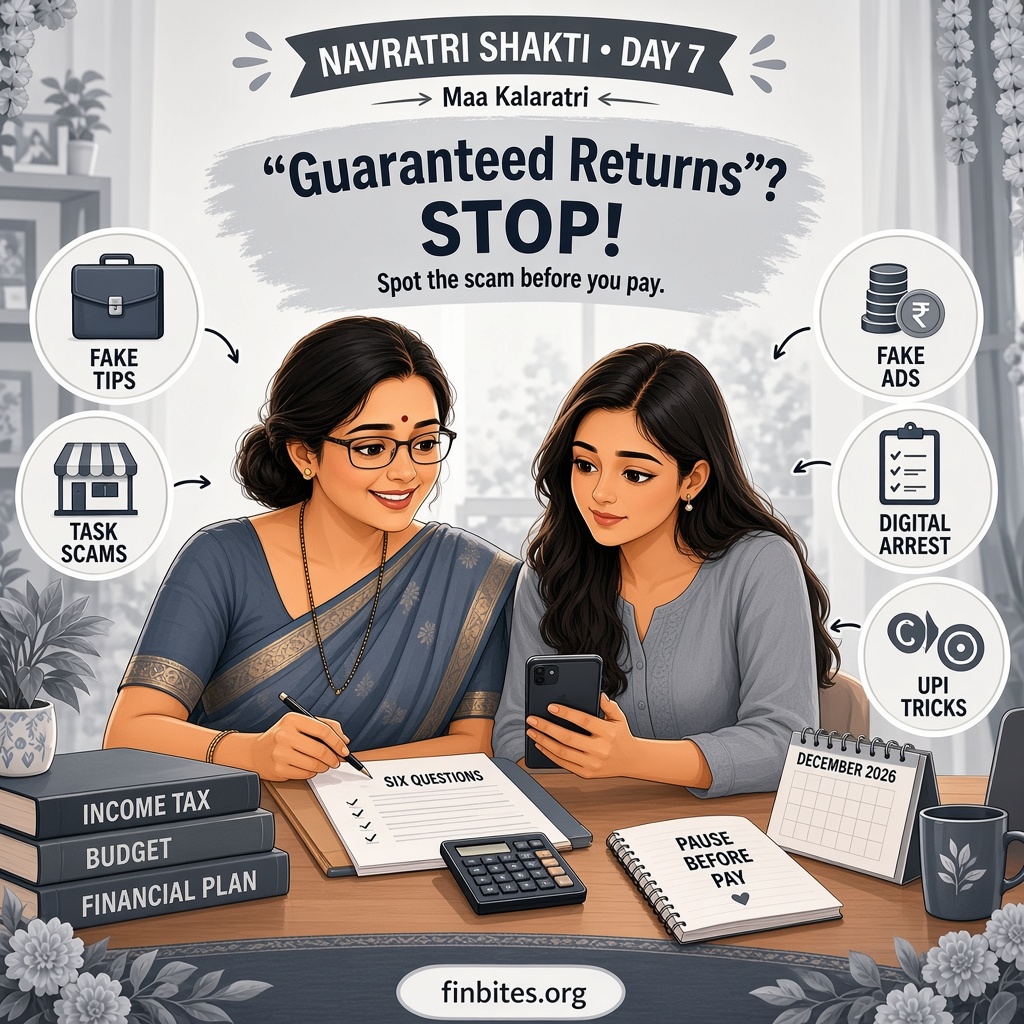
“Guaranteed Returns”? STOP! 🚨 Spot the Financial Scam Before You Pay.
Learn the red flags. Protect your hard-earned money. Think before you trust. Navratri Shakti Day 7 with Aai — five common scams, six questions to ask before investing, and what to do if you’ve already been cheated. Education only.

“Guaranteed Returns”? STOP! 🚨
Spot the Financial Scam Before You Pay.
Learn the red flags. Protect your hard-earned money. Think before you trust.
Navratri Shakti | Day 7
In this article, you’ll discover:
- 🚨 5 common financial scams that are tricking people in India.
- 🔍 6 questions to ask before investing or trusting an attractive financial offer.
- 🛡️ How to spot hidden fees and warning signs before you commit your hard-earned money.
- 🆘 What to do if you’ve already been scammed — including where to report it.
Because sometimes, protecting your money starts with one simple question: “Wait… what’s the catch?”
Day 7 at a glance — swipe
1 / 4
Pause on the lure

An exciting WhatsApp offer is not proof of a safe opportunity.
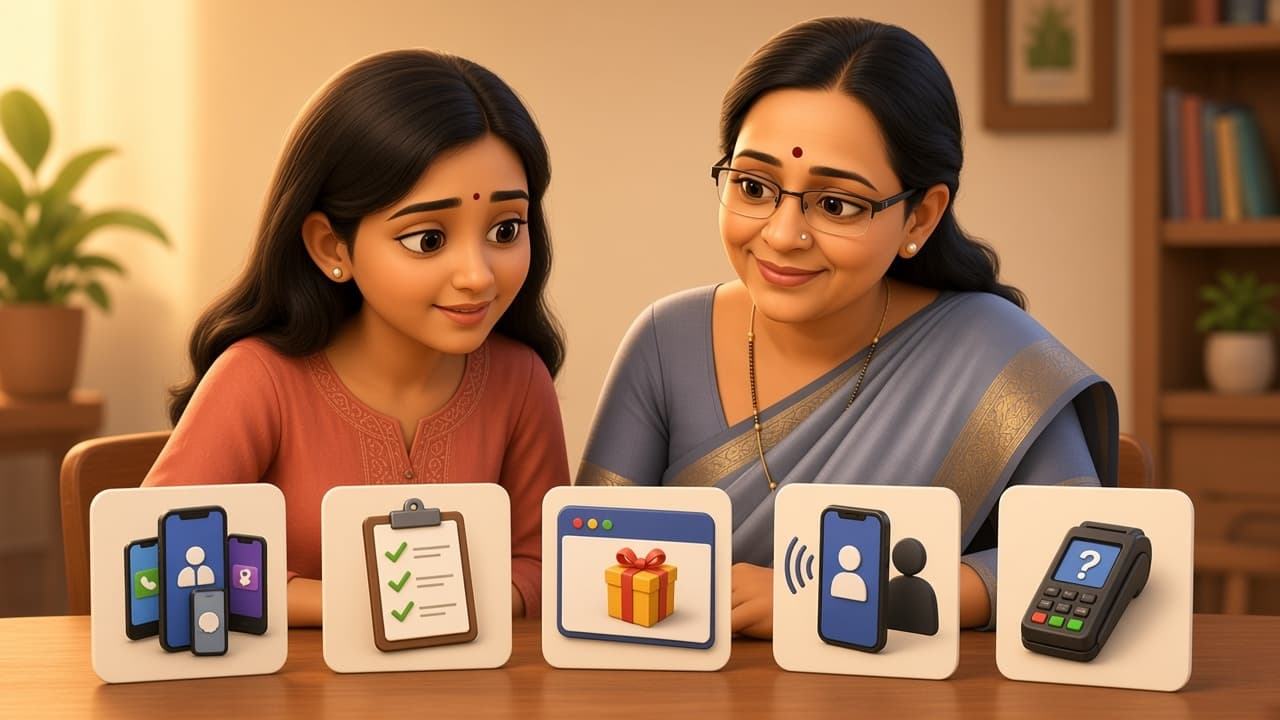
Aai receives an exciting message…
One evening, Aai was scrolling through WhatsApp when a message caught her attention.
“Invest ₹10,000 today and earn huge profits! Limited seats. Join our exclusive investment group now!”
The message had screenshots of big profits, smiling people, and comments from members saying, “I received my money!”
Aai showed it to her daughter.
“Look at this! If we earn some extra money, we can save more for the family. Should we try it?”
Her daughter didn’t say yes or no immediately.
Instead, she asked one simple question:
“Aai, if this offer is so good, why are they in such a hurry to get our money?”
That question made Aai pause.
Over the past six days, she had learned how to save, build an emergency fund, understand SIPs, protect her family with insurance, think differently about gold, and understand taxes.
Today, she was going to learn another important lesson: how to recognise offers that may cost us more than we realise.
1. When someone promises quick, guaranteed profits
Imagine someone tells you:
- “Double your money in three months!”
- “Earn daily profits without any risk!”
- “Our expert knows exactly which shares will rise.”
- “This opportunity is available only to selected people.”
It sounds tempting, especially when we have worked hard to save our money.
But remember: promises of high, guaranteed returns with little or no risk are a major warning sign.
Real investments can go up or down. Even experienced investors cannot promise that the stock market will always make money.
A genuine opportunity should give you enough time to understand it. It should not depend on you making a decision in the next ten minutes.

Warning sign
Promises of high, guaranteed returns with little or no risk deserve a closer look.
2. Five financial traps people should know about
These are common types of fraud that Indian authorities have warned people about. The examples below show how such traps may work.
Five traps — swipe
1 / 5
Fake stock tip groups

Screenshots of profits on an unfamiliar app are not proof you have earned money.



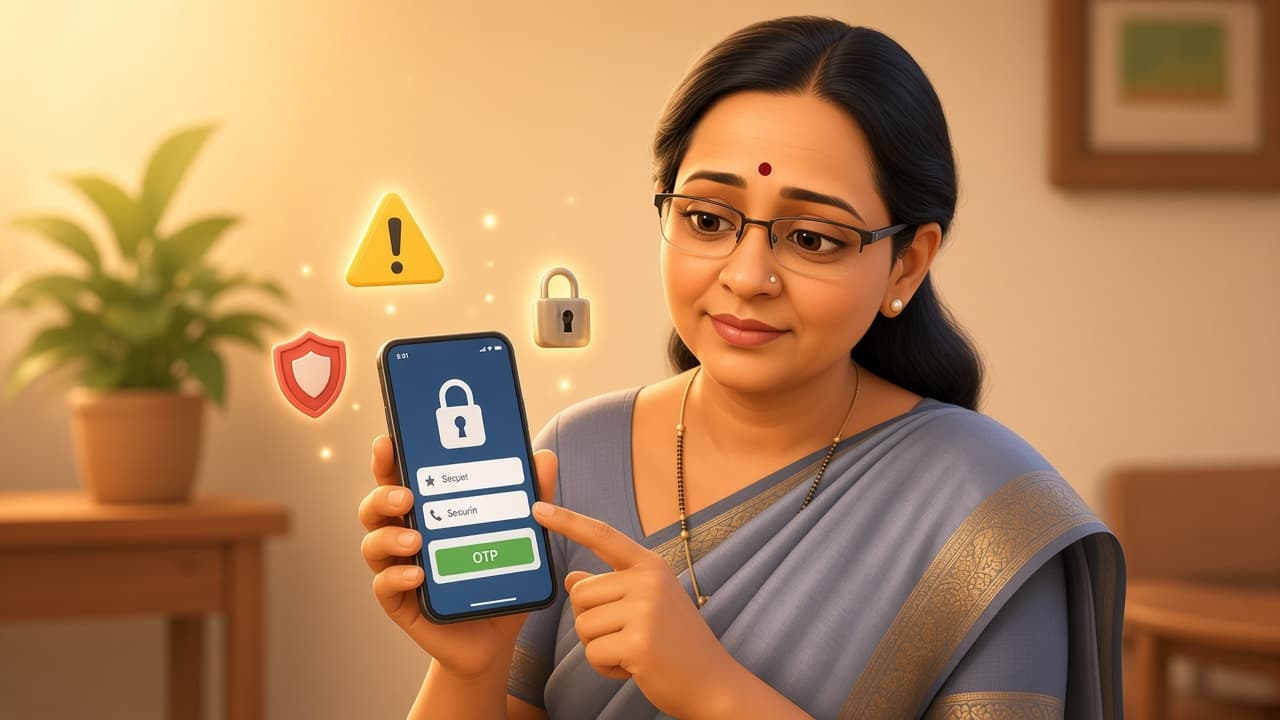
Trap 1: Fake stock market groups
You receive an invitation to a WhatsApp or Telegram group. Someone claiming to be an expert shares stock tips, screenshots of profits, and a link to a special trading app.
At first, the numbers look impressive. You may even see a small profit or receive a little money back. Then you are encouraged to invest much more.
When you try to withdraw your money, you are told to pay another fee, tax, or account-unlocking charge.
Remember: A profit displayed on an unfamiliar app is not proof that you have actually earned money. Verify the broker and app independently before investing.
Trap 2: Online tasks that promise easy income
“Like a video, rate a hotel, complete a task, and earn money!”
It may begin with simple work and a small payment. Then you are asked to deposit your own money to unlock bigger tasks or higher rewards.
The app may show your earnings growing, but withdrawing them becomes difficult. You may be asked to pay more before you can get your money back.
Remember: Be very careful if a supposed job asks you to keep depositing money to unlock earnings. Verify the opportunity independently before paying anything.
Trap 3: Fake celebrity investment ads
You see a familiar business leader or celebrity recommending an investment that promises extraordinary returns.
The video looks real. The person's voice sounds familiar. The advertisement even looks professional.
But photos, videos, and voices can be manipulated. Scammers may use fake endorsements to make an investment look trustworthy.
Remember: Don't invest just because a famous face appears in an advertisement. Check the claim through the person's or organisation's genuine official channels.
Trap 4: The “digital arrest” threat
Someone calls and claims to be from the police or a government agency. They say your Aadhaar, bank account, phone number, or a parcel is connected to a crime.
They may show a fake ID, keep you on a video call, and threaten arrest unless you transfer money immediately.
The fear can feel very real.
But there is no legal process called “digital arrest” in India. Do not transfer money because someone threatens you over a phone or video call.
End the call, contact the relevant agency through independently verified official details, and speak to someone you trust.
Trap 5: Fake bank messages and UPI payment tricks
You receive a message saying your bank account will be blocked, your KYC needs updating, or a payment is waiting for you.
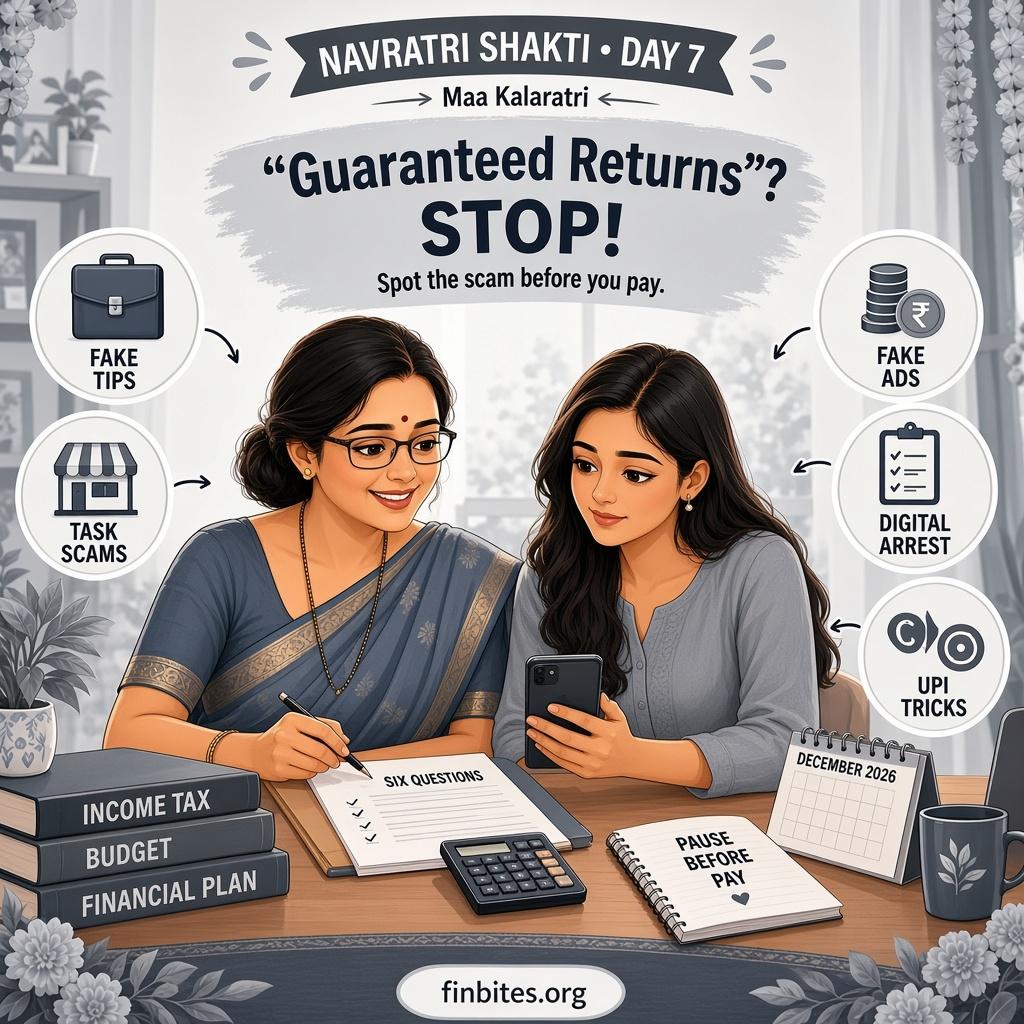
The message includes a link or asks you to share an OTP, PIN, password, or other confidential details.
Another trick involves a UPI request that looks like money coming into your account, when you are actually being asked to approve a payment.
Remember: Receiving money through UPI does not require you to enter your UPI PIN. Never share your PIN or OTP, and don't approve a payment request unless you understand exactly what it will do.
3. Not every trap is a scam. Some are simply too expensive.
Aai was surprised.
“So, I should avoid every financial offer that comes my way?”
“Not at all,” her daughter replied. “Some offers are genuine, but they may still be unsuitable or expensive.”
Let's look at a few examples.
A loan with a low monthly payment
A small EMI may look affordable. But what about the interest rate, processing fee, insurance charges, late-payment penalties, and the total amount you will repay?
Always check the full cost of borrowing, not just the monthly instalment.
An investment with high fees
An investment may be legitimate but have charges that reduce the money you keep. Look at the fees, exit charges, lock-in period, and other conditions before agreeing.
For example, if an investment earns a return, some of that return may be reduced by expenses. The actual impact depends on the investment and its fee structure.
A product sold as a tax-saving solution
Someone may tell you to buy a financial product because it will save tax. But saving tax alone does not mean the product is right for you.
Understand what you are buying, what it costs, how long your money may be locked in, and whether it suits your needs.
The lesson: A product can be legal and still be a poor fit for your financial goals.

4. Before you pay, ask these six questions
Aai decided to make a small checklist and keep it handy.
- Who is offering this? Can I verify the person, company, broker, or adviser independently?
- How do they make money? Is the business model clear, or are the promised profits difficult to explain?
- What are the total fees? Are there commissions, hidden charges, penalties, or withdrawal fees?
- Can I lose money? What happens if the investment performs badly?
- Can I get my money out? Are there lock-ins, exit charges, or conditions I don't understand?
- Am I being rushed? Why must I pay today? Can I take time to check everything?
If you cannot get clear answers, pause. You do not have to say yes just because someone is persuasive.

5. What if you have already paid?
First, don't feel ashamed. Scams are designed to manipulate trust, excitement, and fear. Anyone can be targeted.
If you suspect you have been cheated:
- Contact your bank or payment provider immediately and report the transaction.
- Call India's cybercrime helpline 1930 as soon as possible if money has been lost to online financial fraud.
- Report the incident at cybercrime.gov.in.
- Save messages, phone numbers, transaction IDs, screenshots, and payment details.
- Do not pay an additional “recovery fee” to someone promising to get your lost money back.
Quick reporting may help authorities and banks take action, although recovery is not guaranteed.

6. Aai learns to pause before saying yes
Aai looked at the message again.
The promise of quick profits was still tempting, but now she noticed what she had missed earlier: pressure to act quickly, no clear explanation of the investment, and no independently verified details.
She closed the message.
“I'm glad I asked you first,” she said.
Her daughter smiled. “You don't have to understand every financial product, Aai. But you should never feel pressured to put your money into something you don't understand.”
Aai had learned something valuable.
Saving money takes effort. Growing it takes patience. Protecting it requires asking questions.
And sometimes, the smartest financial decision is simply to pause before you pay.

Your FinBites lesson from Navratri Shakti
Over the past seven days, Aai has learned that financial independence is not about knowing everything or making money quickly.
It is about understanding your choices, protecting your family, and making decisions with confidence.
Before you invest, borrow, or accept an exciting offer, remember:
If it sounds too good to be true, pause and verify. If the fees are unclear, ask. If someone pressures you, step back.
Share this lesson with someone you care about. One careful question today could help protect someone else's hard-earned savings tomorrow.
Official resources: Where to check and report
- SEBI Investor — How to Spot a Scam: https://investor.sebi.gov.in/spot-any-scam.html
- SEBI Investor — Avoiding Investment Frauds: https://investor.sebi.gov.in/beware-of-investment.html
- SEBI Investor Support — Check registered intermediaries and authorised trading apps: https://investor.sebi.gov.in/Investor-support.html
- National Cyber Crime Reporting Portal: https://www.cybercrime.gov.in/
- Cyber financial fraud helpline: 1930 — report suspected online financial fraud as soon as possible.
Disclaimer: This article is for general financial education only. It is not personalised financial, investment, legal, or tax advice. Verify financial products and regulated entities through official sources before making decisions. No investment is free from risk.
“पैसे दुप्पट करून देतो”? थांबा! 🚨
पैसे भरण्याआधी फसवणुकीची ही चिन्हं ओळखा!
तुमच्या कष्टाच्या पैशांचं संरक्षण करा. कोणावरही विश्वास ठेवण्याआधी विचार करा.
नवरात्री शक्ती | दिवस ७
या लेखात तुम्हाला काय समजेल?
- 🚨 भारतात लोकांची फसवणूक करण्यासाठी वापरले जाणारे ५ सामान्य प्रकार.
- 🔍 गुंतवणूक करण्याआधी किंवा एखाद्या आकर्षक ऑफरवर विश्वास ठेवण्याआधी विचारायचे ६ प्रश्न.
- 🛡️ लपलेले चार्जेस आणि धोक्याची चिन्हं कशी ओळखायची.
- 🆘 आधीच फसवणूक झाली असेल, तर काय करायचं आणि तक्रार कुठे करायची.
कारण कधी कधी आपले पैसे सुरक्षित ठेवण्यासाठी एकच प्रश्न पुरेसा असतो:
“थांबा जरा… यात नेमकं काय लपलंय?”
दिवस ७ एका नजरेत — स्वाइप करा
1 / 4
आकर्षक मेसेजवर थांबा
आकर्षक WhatsApp ऑफर म्हणजे सुरक्षित संधी, असा पुरावा नाही.
आईला एक आकर्षक मेसेज येतो…
एका संध्याकाळी आई WhatsApp पाहत बसली होती. तेवढ्यात तिचं लक्ष एका मेसेजकडे गेलं.
“आजच ₹१०,००० गुंतवा आणि भरपूर नफा कमवा! मर्यादित लोकांनाच संधी! आमच्या खास गुंतवणूक ग्रुपमध्ये लगेच सामील व्हा!”
मेसेजमध्ये मोठ्या नफ्याचे स्क्रीनशॉट होते. काही लोकांचे फोटो होते आणि ग्रुपमधले लोक लिहित होते, “मला माझे पैसे मिळाले!”
आईने तो मेसेज मुलीला दाखवला.
“अगं, बघ ना! यातून थोडे जास्त पैसे मिळाले, तर घरासाठी आणखी बचत करता येईल. आपणही प्रयत्न करून बघायचा का?”
मुलीने लगेच हो किंवा नाही असं काहीच सांगितलं नाही.
तिने आईला एक प्रश्न विचारला.
“आई, ही संधी एवढीच चांगली आहे, तर मग त्यांना आपल्याकडून पैसे घ्यायची इतकी घाई का आहे?”
आई थोडी थांबली.
गेल्या सहा दिवसांत तिने बचत, इमर्जन्सी फंड, SIP, विमा, सोनं आणि टॅक्स याबद्दल समजून घेतलं होतं.
आज तिला आणखी एक महत्त्वाची गोष्ट शिकायची होती — आपले पैसे अडकू शकतील किंवा कमी होऊ शकतील अशा ऑफर्स कशा ओळखायच्या.
१. झटपट आणि खात्रीशीर नफ्याचं आश्वासन मिळालं तर…
समजा, कुणीतरी तुम्हाला असं सांगतं:
- “तीन महिन्यांत पैसे दुप्पट करून देतो!”
- “कसलाही धोका नाही, रोज नफा मिळेल!”
- “आमच्या तज्ज्ञांना कोणता शेअर वाढणार हे आधीच माहीत असतं.”
- “ही संधी फक्त निवडक लोकांसाठी आहे. लगेच पैसे भरा!”
आपण कष्टाने पैसे कमावलेले असतात. त्यामुळे त्यातून जास्त पैसे मिळणार असतील, तर अशी ऑफर आकर्षक वाटू शकते.
पण एक गोष्ट लक्षात ठेवा.
कमी धोका असल्याचं सांगून मोठ्या आणि खात्रीशीर नफ्याचं आश्वासन देणं, हा धोक्याचा इशारा असू शकतो.
खऱ्या गुंतवणुकीत नफा होऊ शकतो, तसंच नुकसानही होऊ शकतं. शेअर बाजारात नेहमीच पैसे मिळतील, याची खात्री कोणीही देऊ शकत नाही.
चांगली संधी समजून घेण्यासाठी तुम्हाला वेळ मिळायला हवा. पुढच्या दहा मिनिटांतच निर्णय घ्या, असा दबाव असेल तर सावध व्हा.
धोक्याचा इशारा
कमी धोका आणि मोठा खात्रीशीर नफा — अशा आश्वासनाकडे विशेष लक्ष द्या.
२. पैशांची फसवणूक करण्याचे ५ प्रकार
भारतात अशा प्रकारच्या फसवणुकीबद्दल सरकारी यंत्रणांनी अनेकदा इशारे दिले आहेत. हे सापळे कसे काम करू शकतात, ते सोप्या उदाहरणांतून पाहूया.
५ प्रकार — स्वाइप करा
1 / 5
बनावट शेअर टिप ग्रुप
अनोळखी ॲपमधील नफ्याचे स्क्रीनशॉट म्हणजे खरे पैसे कमावले, असा पुरावा नाही.
प्रकार १: WhatsApp किंवा Telegram वरील बनावट शेअर बाजार ग्रुप
तुम्हाला WhatsApp किंवा Telegram ग्रुपमध्ये सामील होण्यासाठी मेसेज येतो. तिथे एक व्यक्ती स्वतःला शेअर बाजारातील तज्ज्ञ म्हणवते. ती शेअरचे टिप्स, नफ्याचे स्क्रीनशॉट आणि एका खास ट्रेडिंग ॲपची लिंक देते.
सुरुवातीला सगळं खरं वाटतं. ॲपमध्ये नफा दिसतो किंवा तुम्हाला थोडे पैसे परतही मिळतात. त्यामुळे विश्वास वाढतो आणि मग तुम्हाला आणखी पैसे गुंतवायला सांगितले जातात.
पण पैसे काढायची वेळ आली की नवीन अडचणी सुरू होतात. कधी टॅक्स, कधी फी, तर कधी अकाउंट सुरू करण्याच्या नावाखाली आणखी पैसे मागितले जातात.
लक्षात ठेवा: अनोळखी ॲपमध्ये नफा दिसतोय, म्हणजे ते पैसे खरोखर कमावले आहेत, असं नाही. गुंतवणूक करण्याआधी ब्रोकर आणि ॲपची माहिती स्वतंत्रपणे तपासा.
प्रकार २: घरबसल्या पैसे कमावण्याच्या नावाखाली टास्कची फसवणूक
“व्हिडिओला लाईक करा, हॉटेलला रेटिंग द्या, छोटं काम करा आणि पैसे कमवा!”
सुरुवातीला अगदी सोपी कामं दिली जातात. कधी थोडे पैसेही मिळतात. मग जास्त पैसे कमावण्यासाठी किंवा पुढचे टास्क सुरू करण्यासाठी स्वतःचे पैसे जमा करायला सांगितले जातात.
ॲपमध्ये तुमची कमाई वाढताना दिसते. पण पैसे काढताना अडचणी येतात. पैसे परत मिळवण्यासाठीही आणखी रक्कम भरायला सांगितली जाऊ शकते.
लक्षात ठेवा: कामातून मिळणारे पैसे काढण्यासाठी वारंवार स्वतःचे पैसे जमा करावे लागत असतील, तर सावध व्हा. पैसे भरण्याआधी त्या कामाची खरी माहिती तपासा.
प्रकार ३: सेलिब्रिटीच्या नावाने बनावट गुंतवणुकीच्या जाहिराती
एखादा प्रसिद्ध उद्योगपती किंवा सेलिब्रिटी एका गुंतवणुकीची शिफारस करताना दिसतो. जाहिरातीत मोठा नफा मिळण्याचं आश्वासन दिलेलं असतं.
व्हिडिओ खरा वाटतो. आवाजही ओळखीचा वाटतो. जाहिरात अगदी प्रोफेशनल दिसते.
पण आज फोटो, व्हिडिओ आणि आवाजातही फेरफार करता येतो. फसवणूक करणारे लोक बनावट जाहिरातींमधून प्रसिद्ध व्यक्तींचा वापर करून विश्वास निर्माण करू शकतात.
लक्षात ठेवा: जाहिरातीत प्रसिद्ध व्यक्ती दिसते म्हणून लगेच गुंतवणूक करू नका. संबंधित व्यक्तीच्या किंवा संस्थेच्या अधिकृत माध्यमांवर ती माहिती तपासा.
प्रकार ४: “डिजिटल अरेस्ट”ची भीती दाखवणं
फोनवर एखादी व्यक्ती स्वतःला पोलीस अधिकारी किंवा सरकारी अधिकारी असल्याचं सांगते.
तुमचं आधार कार्ड, बँक खातं, फोन नंबर किंवा तुमच्या नावावर आलेलं पार्सल एखाद्या गुन्ह्याशी जोडलेलं आहे, असं ती सांगते.
कधी बनावट ओळखपत्र दाखवलं जातं. व्हिडिओ कॉलवर ठेवलं जातं आणि लगेच पैसे पाठवले नाहीत, तर अटक करू अशी धमकी दिली जाते.
अशा वेळी भीती वाटणं स्वाभाविक आहे. पण भारतात “डिजिटल अरेस्ट” नावाची कायदेशीर प्रक्रिया नाही.
फोनवर किंवा व्हिडिओ कॉलवर धमकी देऊन पैसे मागितले, तर पैसे पाठवू नका. कॉल बंद करा, संबंधित सरकारी यंत्रणेची माहिती अधिकृत मार्गाने तपासा आणि विश्वासातील व्यक्तीशी बोला.
प्रकार ५: बँकेचे बनावट मेसेज आणि UPI पेमेंटचे सापळे
तुम्हाला मेसेज येतो — तुमचं बँक खातं बंद होणार आहे, KYC अपडेट करा किंवा तुमच्यासाठी पेमेंट थांबलं आहे.
मेसेजमध्ये एक लिंक असते किंवा OTP, PIN, पासवर्ड यांसारखी गोपनीय माहिती मागितली जाते.
UPI मध्येही एक युक्ती वापरली जाऊ शकते. तुम्हाला पैसे मिळत आहेत असं वाटतं, पण प्रत्यक्षात तुम्हाला दुसऱ्याला पैसे पाठवण्याची विनंती मंजूर करायला सांगितलेलं असतं.
लक्षात ठेवा: UPI वर पैसे मिळवण्यासाठी UPI PIN टाकण्याची गरज नसते. PIN किंवा OTP कोणालाही सांगू नका. पेमेंटची विनंती नेमकी कशासाठी आहे, हे समजल्याशिवाय ती मंजूर करू नका.
३. प्रत्येक महागडी ऑफर फसवणूक नसते — पण ती तुमच्यासाठी योग्य असेलच असं नाही
आईला आश्चर्य वाटलं.
“म्हणजे मी प्रत्येक आर्थिक ऑफरपासून लांबच राहायचं का?”
मुलगी म्हणाली, “तसं नाही गं. काही ऑफर्स खऱ्या असतात. पण त्यांचा खर्च जास्त असू शकतो किंवा त्या आपल्या गरजेसाठी योग्य नसू शकतात.”
चला, काही उदाहरणं पाहूया.
कमी EMI असलेलं कर्ज
महिन्याचा हप्ता कमी दिसतो म्हणून कर्ज स्वस्त असेलच असं नाही. व्याजदर किती आहे, प्रोसेसिंग फी किती आहे, इन्शुरन्स किंवा इतर चार्जेस आहेत का, हप्ता उशिरा भरल्यास किती दंड लागतो आणि शेवटी एकूण किती पैसे भरावे लागतील — हे तपासा.
फक्त महिन्याचा हप्ता पाहू नका. कर्जाचा एकूण खर्च समजून घ्या.
जास्त फी असलेली गुंतवणूक
एखादी गुंतवणूक कायदेशीर आणि खरी असली, तरी तिच्या फीमुळे तुमच्या हातात राहणारा नफा कमी होऊ शकतो.
गुंतवणुकीची फी, पैसे काढतानाचे चार्जेस, किती काळ पैसे काढता येणार नाहीत आणि इतर अटी समजून घ्या.
टॅक्स वाचवण्यासाठी एखादं उत्पादन घेण्याचा सल्ला
कोणी सांगितलं की एखादं आर्थिक उत्पादन घेतल्याने टॅक्स वाचेल, तर लगेच ते घेऊ नका.
त्या उत्पादनाचा खर्च किती आहे, पैसे किती काळ अडकू शकतात, त्यात काय धोके आहेत आणि ते तुमच्या गरजेला योग्य आहे का, हे आधी समजून घ्या.
म्हणजे काय? एखादी गोष्ट कायदेशीर असली, तरी ती तुमच्या आर्थिक उद्दिष्टांसाठी योग्य असेलच असं नाही.
४. पैसे देण्याआधी हे ६ प्रश्न नक्की विचारा
आईने हे प्रश्न एका कागदावर लिहून ठेवायचं ठरवलं.
१. ही ऑफर कोण देत आहे? त्या व्यक्तीची, कंपनीची, ब्रोकरची किंवा सल्लागाराची माहिती स्वतंत्रपणे तपासता येते का?
२. त्यांना पैसे कसे मिळतात? त्यांचा व्यवसाय कसा चालतो हे स्पष्ट आहे का? नफ्याचं गणित समजतंय का?
३. एकूण खर्च किती आहे? कमिशन, लपलेले चार्जेस, दंड किंवा पैसे काढण्याची फी आहे का?
४. माझे पैसे कमी होऊ शकतात का? गुंतवणुकीत नुकसान झालं, तर काय होईल?
५. मला माझे पैसे परत काढता येतील का? पैसे काही काळ अडकणार आहेत का? पैसे काढताना काही अटी किंवा चार्जेस आहेत का?
६. माझ्यावर घाई करण्याचा दबाव आहे का? आजच पैसे का भरायचे? मला सगळं तपासण्यासाठी वेळ का मिळत नाही?
या प्रश्नांची स्पष्ट उत्तरं मिळत नसतील, तर थांबा. समोरची व्यक्ती कितीही गोड बोलत असली, तरी लगेच होकार देण्याची गरज नाही.
५. आधीच पैसे भरले असतील तर काय करायचं?
सगळ्यात आधी स्वतःला दोष देऊ नका. फसवणूक करणारे लोक विश्वास, भीती आणि जास्त पैसे मिळवण्याची आशा यांचा वापर करतात. कोणाचीही फसवणूक होऊ शकते.
तुमची फसवणूक झाल्याचा संशय असेल, तर:
- लगेच तुमच्या बँकेला किंवा पेमेंट सेवा देणाऱ्या कंपनीला संपर्क करा आणि व्यवहाराची तक्रार नोंदवा.
- ऑनलाइन आर्थिक फसवणूक झाली असेल, तर शक्य तितक्या लवकर १९३० या सायबर क्राइम हेल्पलाइनवर फोन करा.
- cybercrime.gov.in या अधिकृत पोर्टलवर तक्रार नोंदवा.
- मेसेज, फोन नंबर, व्यवहार क्रमांक, स्क्रीनशॉट आणि पेमेंटची माहिती जपून ठेवा.
- “तुमचे पैसे परत मिळवून देतो” असं सांगून आणखी फी मागणाऱ्यांपासून सावध राहा.
लवकर तक्रार केल्यामुळे बँक आणि संबंधित यंत्रणांना कारवाई करण्याची संधी मिळू शकते. मात्र, पैसे परत मिळतील याची हमी नसते.
६. आईने एक महत्त्वाची गोष्ट शिकली
आईने पुन्हा एकदा तो मेसेज पाहिला.
झटपट नफा मिळण्याचं आश्वासन अजूनही आकर्षक वाटत होतं. पण आता तिच्या लक्षात आलं — लगेच निर्णय घ्यायचा दबाव होता, गुंतवणूक नेमकी कशात होती हे स्पष्ट नव्हतं आणि माहितीची खात्रीही करता येत नव्हती.
तिने मेसेज बंद केला.
“बरं झालं, मी आधी तुला विचारलं,” आई म्हणाली.
मुलगी हसून म्हणाली, “आई, प्रत्येक आर्थिक गोष्ट आपल्याला माहिती असायलाच हवी असं नाही. पण जी गोष्ट समजत नाही, त्यात पैसे टाकण्यासाठी कुणी दबाव आणायला नको.”
आईला एक महत्त्वाची गोष्ट समजली.
पैसे वाचवायला मेहनत लागते. ते वाढवायला वेळ लागतो. आणि ते सुरक्षित ठेवण्यासाठी योग्य प्रश्न विचारावे लागतात.
कधी कधी पैशांबाबत घेतलेला सर्वात चांगला निर्णय म्हणजे पैसे भरण्याआधी थोडं थांबणं.
नवरात्री शक्ती — FinBites चा आजचा धडा
गेल्या सात दिवसांत आईला समजलं की आर्थिकदृष्ट्या सक्षम होण्यासाठी सगळं काही माहिती असण्याची किंवा झटपट श्रीमंत होण्याची गरज नाही.
आपल्यासमोर असलेले पर्याय समजून घेणं, कुटुंबाचे पैसे सुरक्षित ठेवणं आणि विचार करून निर्णय घेणं महत्त्वाचं आहे.
गुंतवणूक करण्याआधी, कर्ज घेण्याआधी किंवा एखादी आकर्षक ऑफर स्वीकारण्याआधी हे लक्षात ठेवा:
ऑफर खूपच चांगली वाटत असेल, तर आधी तपासा. फी समजत नसेल, तर प्रश्न विचारा. कुणी घाई करायला लावत असेल, तर थोडं मागे व्हा.
हा लेख तुमच्या जवळच्या व्यक्तीसोबतही शेअर करा. आज विचारलेला एक योग्य प्रश्न उद्या कुणाचे कष्टाचे पैसे वाचवू शकतो.
अधिकृत मदत आणि माहिती
- SEBI Investor — फसवणूक कशी ओळखावी: https://investor.sebi.gov.in/spot-any-scam.html
- SEBI Investor — गुंतवणुकीतील फसवणूक टाळण्यासाठी माहिती: https://investor.sebi.gov.in/beware-of-investment.html
- SEBI Investor Support — नोंदणीकृत संस्था आणि अधिकृत ट्रेडिंग ॲप्स तपासा: https://investor.sebi.gov.in/Investor-support.html
- राष्ट्रीय सायबर क्राइम तक्रार पोर्टल: https://www.cybercrime.gov.in/
- ऑनलाइन आर्थिक फसवणुकीसाठी हेल्पलाइन: १९३० — फसवणूक झाल्याचा संशय असेल, तर शक्य तितक्या लवकर संपर्क करा.

महत्त्वाची टीप: हा लेख फक्त आर्थिक शिक्षणासाठी आहे. हा वैयक्तिक आर्थिक, गुंतवणूक, कायदेशीर किंवा टॅक्स सल्ला नाही. कोणतीही गुंतवणूक करण्याआधी संबंधित संस्था आणि उत्पादनाची माहिती अधिकृत स्रोतांवर तपासा. प्रत्येक गुंतवणुकीत काही ना काही धोका असतो.
Found this useful?
Forward it to one person who needs it today — a parent, a friend, a colleague.
© FinBites.org · Educational use only · Do not republish without permission. Terms of Service