Is Gold Only Jewellery — or Can It Help Build Your Financial Future?
Navratri Shakti — Day 5 | FinBites
Aai loves her gold bangles. They remind her of her mother, and she wears them proudly during festivals and family celebrations.
Like many Indian women, she also believes that buying a little gold over the years is a good thing for the family.
One evening, her daughter asks her a question.
“Aai, we have learned about saving, emergency funds, SIPs and insurance. But what about gold? Is it only something we buy and wear, or can it also help us plan our financial future?”
Aai smiles. “Gold has always been part of our family. But I never thought much about the different ways we could own it.”
Her daughter explains, “Aai, you don't have to stop buying jewellery! You can love wearing gold and enjoy your family traditions. But you can also learn how gold may fit into your investments.”
Let’s understand how.
Day 5 at a glance — swipe
1 / 4
Jewellery we love

Gold jewellery can carry love, memory and festival joy. That value is real.
1. Gold jewellery: More than money
For many Indian women, jewellery is not just an ornament. It may be a gift from a mother, a wedding memory, or something special bought after years of saving.
There is absolutely nothing wrong with buying jewellery because you love wearing it. The important thing is to understand its purpose.
When we buy gold jewellery, we usually pay for more than the gold itself. The bill may include:
- The price of the gold.
- Making charges for creating the jewellery.
- Applicable taxes and other charges.
When we sell jewellery later, we may not recover all these costs. The amount we receive depends on factors such as gold purity, weight, the buyer's terms and the gold price at that time.
For example, Aai buys a necklace for ₹1 lakh. That amount includes the gold, making charges and applicable taxes.
Years later, even if the gold price has increased, she may not receive the full ₹1 lakh back in a sale because some of the original costs may not be recovered.
So, jewellery can give us joy, beauty and emotional value. But buying jewellery and investing in gold are not exactly the same thing.
Enjoy the jewellery you love. Just don't assume that every rupee spent on jewellery will grow like an investment.
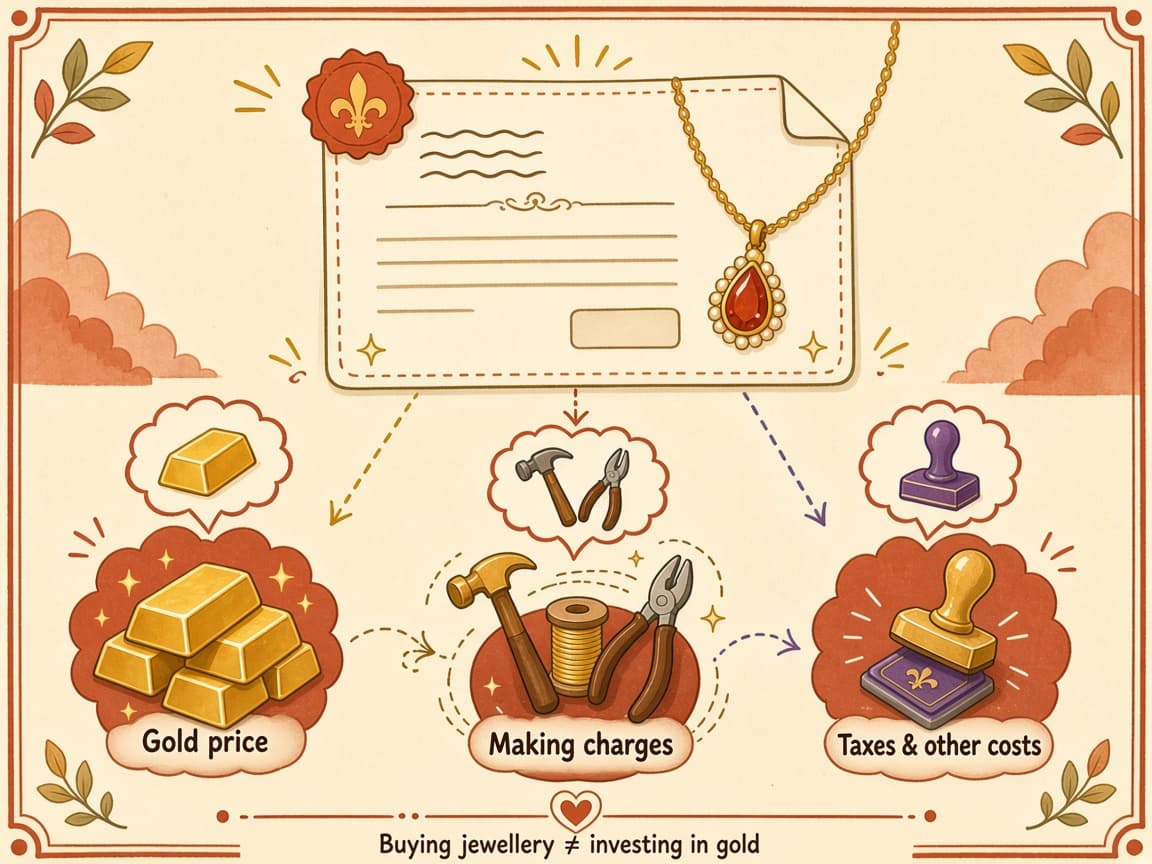
Jewellery ≠ investment
Joy, beauty and memories are real. Recovering every rupee of making charges and taxes is not guaranteed.
2. Can gold also be an investment?
“Yes!” her daughter says. “Gold doesn't always have to be in the form of a necklace, ring or bangle.”
There are other ways to own gold, depending on our needs and understanding.
Physical gold
This includes gold coins and bars.
People may buy them to hold gold without buying jewellery. However, it is important to check purity, purchase costs, safe storage and the terms offered when selling.
Gold ETFs
A Gold Exchange Traded Fund, or Gold ETF, is an investment product designed to track the price of gold.
It is bought and sold on a stock exchange, generally through a demat and trading account.
Instead of storing gold at home, an investor holds units of a fund linked to gold prices. The value of those units can rise or fall, and fund expenses and transaction costs may apply.
Gold mutual funds
Some mutual funds invest in Gold ETFs. These are often called gold funds or gold fund-of-funds.
They offer another way to invest in gold. Depending on the fund and platform, a demat account may not be required.
Like other market-linked investments, their value can rise or fall, and expenses can affect returns.
The simple difference: jewellery is usually bought to wear and enjoy, while gold investment products are generally bought to gain exposure to changes in gold prices.
Neither choice is automatically right or wrong. It depends on why you are buying gold and what you want it to do for you.
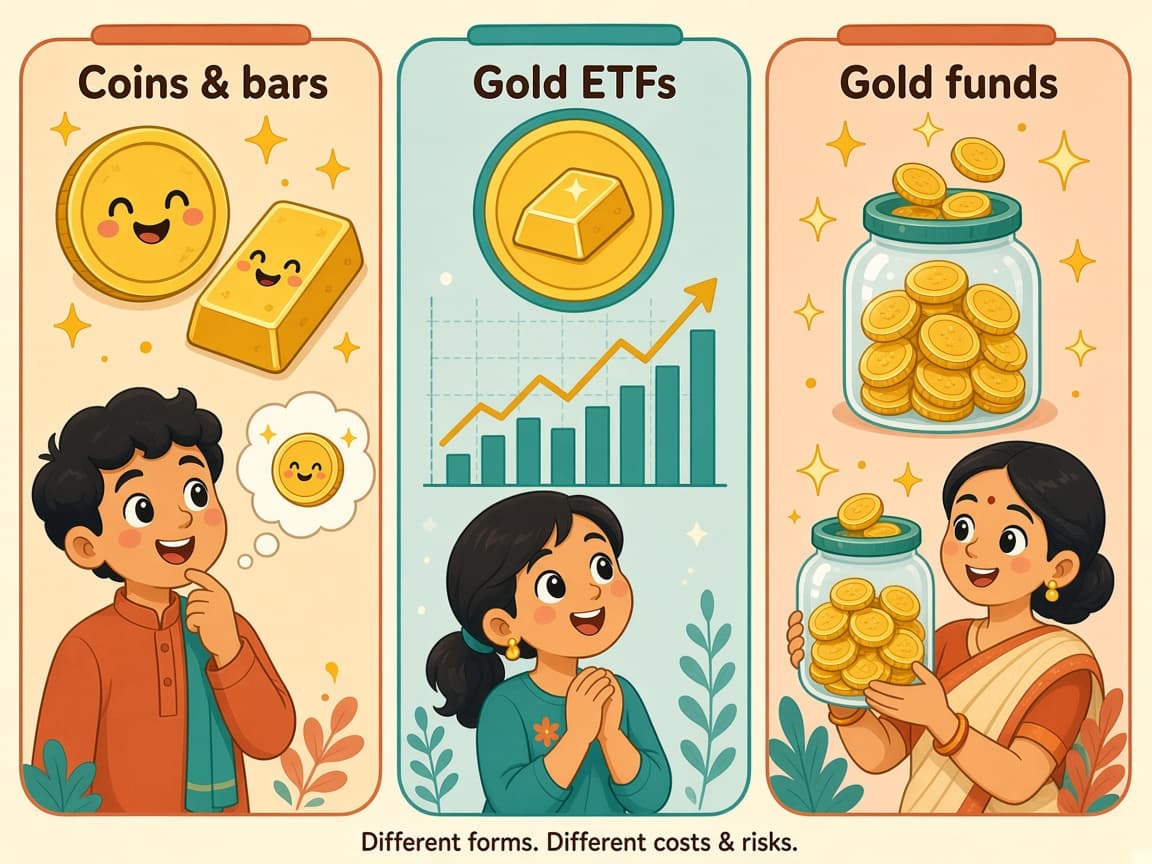
Jewellery
Gold investments
3. Does the price of gold always go up?
Aai has often heard people say, “Gold is always a safe investment.”
Her daughter explains, “Gold has been valuable for a long time, Aai, but its price does not always go up.”
Gold prices can rise or fall because of factors such as global demand, interest rates, currency movements and economic uncertainty.
If Aai buys gold today and its price falls later, the value of her investment may decrease.
Gold also does not pay interest like a bank fixed deposit. Its potential return mainly depends on changes in its price, after accounting for costs.
So, while gold may have a place in a financial plan, it is not a guaranteed way to make money.
Understanding this helps us make decisions based on knowledge rather than simply following what everyone else is doing.
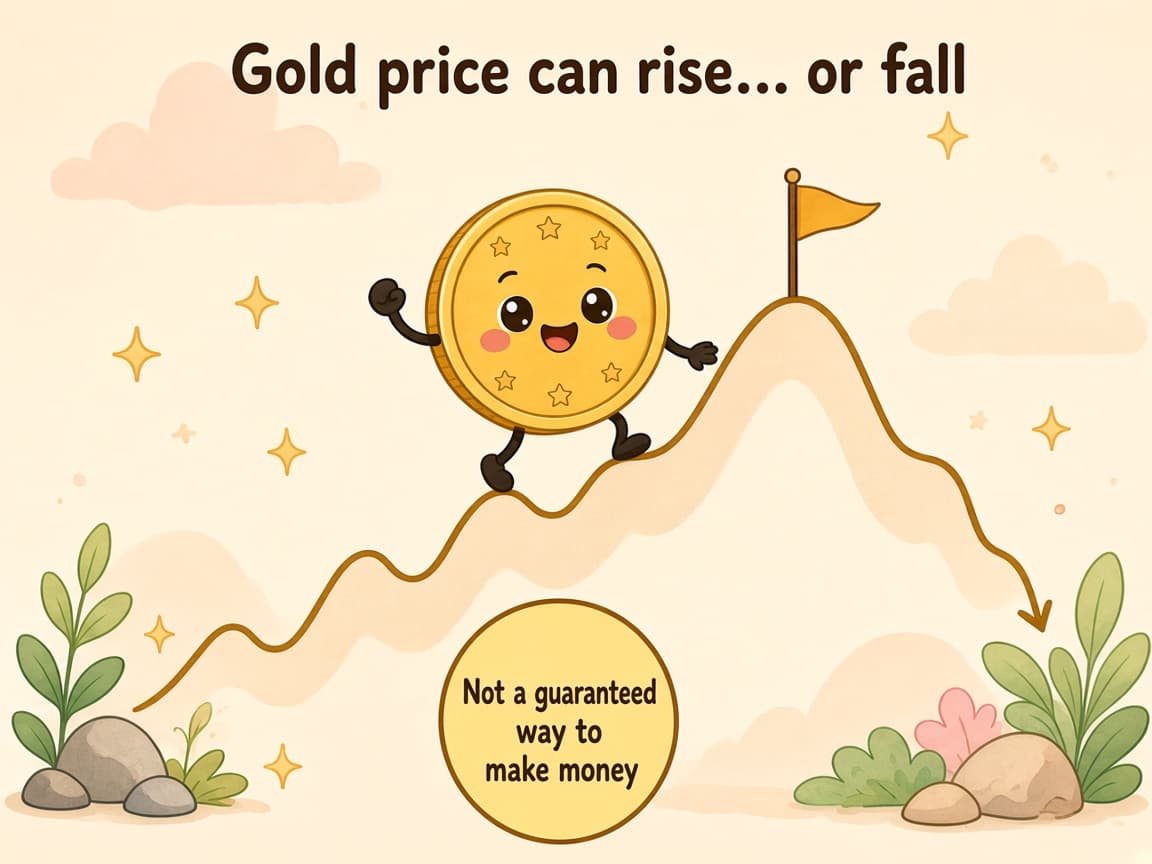
Prices move both ways
Gold can rise or fall. It does not pay interest like a bank fixed deposit.
4. Should some of our investments be in gold?
Now Aai understands that she doesn't have to choose between loving jewellery and learning about investments.
She can do both!
For example, a family may buy jewellery for personal use and separately consider gold as one part of its investment portfolio.
Why consider gold as part of a portfolio?
Because families often use different types of assets for different purposes. Gold may sometimes behave differently from shares or other investments. Holding different types of assets can help diversify a portfolio, although it does not guarantee profits or prevent losses.
But does this mean everyone should put a large amount of money into gold?
Not necessarily.
The right amount, if any, depends on the family's goals, existing investments, financial responsibilities and ability to handle risk. There is no single percentage that is right for every family.
And remember: an emergency fund, insurance and long-term investments each serve different purposes. Gold should not replace money needed for emergencies or essential financial protection.
The idea is not to put all your money into gold. It is to understand whether gold deserves a place alongside your other financial assets.
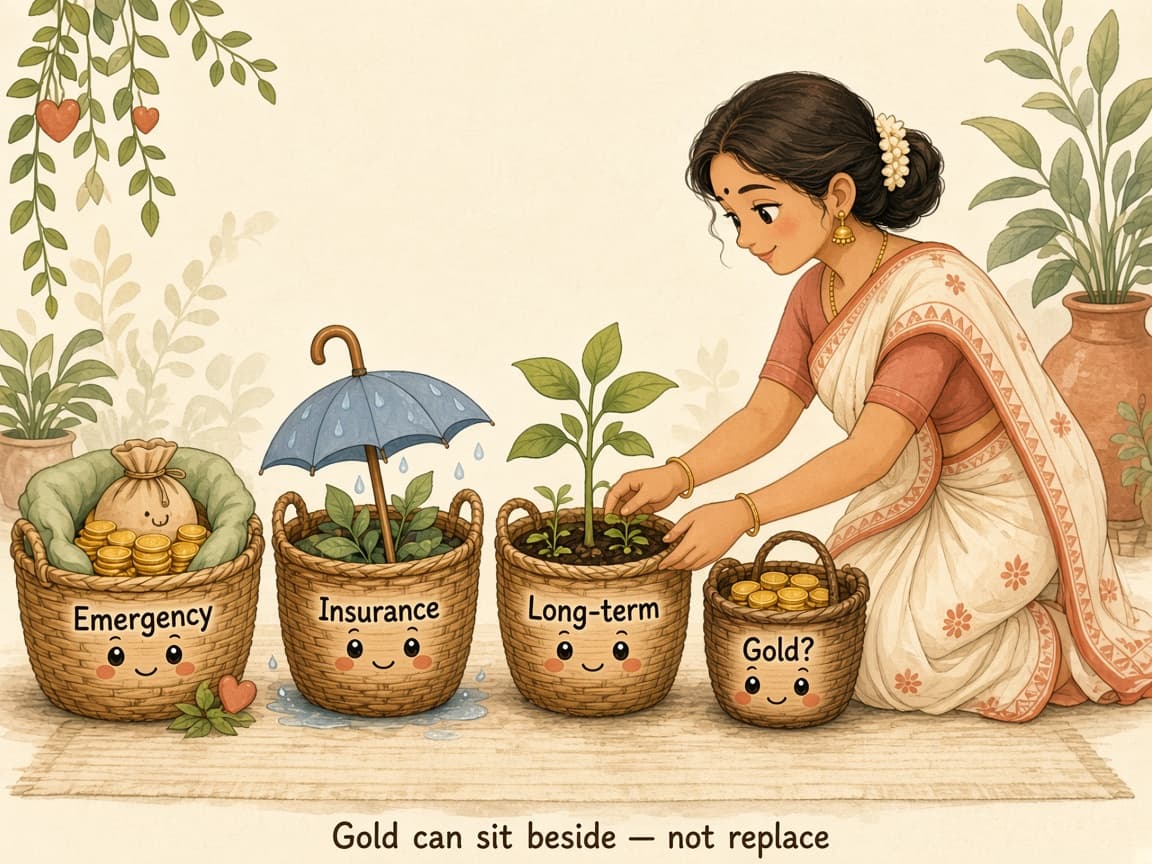
Keep gold in its place — swipe
1 / 4
Buy what you love
Buy jewellery because you love wearing it. Traditions can stay.
5. Aai connects the lessons from the last five days
Aai thinks about everything she has learned during Navratri Shakti.
- Day 1 — Saving: Setting aside money helps us prepare for our needs and goals.
- Day 2 — Emergency fund: Keeping money accessible can help us handle unexpected expenses.
- Day 3 — SIPs: Investing regularly can help us work towards long-term goals, although returns are not guaranteed.
- Day 4 — Insurance: Health and term insurance can help protect us against specific financial risks, according to the policy terms.
- Day 5 — Gold: Jewellery can bring happiness and preserve memories, while gold investments may offer another way to diversify a portfolio.
Aai smiles.
“I don't need to stop buying jewellery that I love. I just need to understand that the gold I wear and the gold I buy as an investment may have different purposes.”
Her daughter nods. “Exactly, Aai! The more we understand our choices, the more confidently we can make them.”
Aai’s lesson for Day 5
Gold can be beautiful. It can carry family memories. It can also be considered as one part of an investment plan.
The important thing is to know why we are buying it.
Buy jewellery because you love it. Consider gold as an investment only after understanding its risks, costs and place in your overall financial plan.
You don't have to give up traditions to become financially aware. You can honour your traditions and make informed money decisions at the same time.

🌺 Navratri Shakti — Day 5
Know what you own. Understand why you own it. Make your money choices with confidence.
FinBites — Money clarity in under 2 minutes.
Disclaimer: This article is for financial education only and does not recommend any particular gold product or investment. Gold prices can rise or fall, and returns are not guaranteed. Jewellery may involve making charges, taxes and resale deductions. Gold ETFs and gold mutual funds carry market risks and may involve additional costs. Diversification does not guarantee profits or eliminate losses. Understand the product, its costs and risks before investing. This article is not personalised financial advice.
सोनं म्हणजे फक्त दागिने — की भविष्यासाठी गुंतवणुकीचाही एक पर्याय?
नवरात्री शक्ती — दिवस ५ | FinBites
आईला तिच्या सोन्याच्या बांगड्या खूप आवडतात. त्या तिच्या आईने दिलेल्या आठवणी आहेत. सणासुदीला आणि कौटुंबिक समारंभात त्या घालायला तिला विशेष आनंद होतो.
इतर अनेक भारतीय महिलांप्रमाणेच, कुटुंबाची परिस्थिती परवडेल तेव्हा थोडं थोडं सोनं खरेदी करणंही तिला चांगली गोष्ट वाटते.
एक दिवस तिची मुलगी तिला विचारते,
“आई, आपण बचत, आपत्कालीन निधी, SIP आणि विमा याबद्दल शिकलो. पण सोन्याचं काय? सोनं म्हणजे फक्त घालण्यासाठीचे दागिने, की ते आपल्या आर्थिक भविष्याचं नियोजन करण्यासाठीही उपयोगी पडू शकतं?”
आई हसून म्हणते, “आपल्या कुटुंबात सोन्याला नेहमीच महत्त्व आहे. पण सोनं वेगवेगळ्या प्रकारेही घेता येतं, याचा मी कधी फारसा विचारच केला नाही.”
मुलगी समजावून सांगते,
“आई, तुला आवडणारे दागिने घालणं बंद करायची अजिबात गरज नाही! तुला सोनं घालायला आवडत असेल, तर त्याचा आनंद नक्की घे. पण त्याचबरोबर गुंतवणुकीच्या दृष्टीनेही सोन्याचा विचार कसा करता येतो, हे समजून घेता येईल.”
चला तर मग, हे सोप्या भाषेत समजून घेऊया.
दिवस ५ एका नजरेत — स्वाइप करा
1 / 4
आवडणारे दागिने
सोन्याचे दागिने प्रेम, आठवणी आणि सणासुदीचा आनंद जपू शकतात. त्याचं मूल्य खरंच आहे.
१. सोन्याचे दागिने: पैशांपेक्षाही अधिक काहीतरी
अनेक भारतीय महिलांसाठी सोन्याचे दागिने म्हणजे केवळ दागिने नसतात. त्यामागे आईने दिलेली भेट, लग्नाच्या आठवणी किंवा अनेक वर्षं बचत करून घेतलेली एखादी खास वस्तू असू शकते.
आपल्याला आवडणारे दागिने खरेदी करण्यात काहीच चुकीचं नाही. फक्त ते आपण कशासाठी खरेदी करत आहोत, हे समजून घेणं महत्त्वाचं आहे.
सोन्याचे दागिने घेताना आपण फक्त सोन्याची किंमत देत नाही. बिलामध्ये इतर खर्चही असू शकतात.
- दागिन्यात वापरलेल्या सोन्याची किंमत.
- दागिना बनवण्यासाठी लागणारे मेकिंग चार्जेस.
- लागू असलेले कर आणि इतर शुल्क.
पुढे हे दागिने विकताना या सर्व खर्चाची पूर्ण रक्कम परत मिळेलच असं नाही. किती पैसे मिळतील हे सोन्याची शुद्धता, वजन, त्या वेळी असलेला सोन्याचा भाव आणि खरेदीदाराच्या अटींवरही अवलंबून असतं.
उदाहरणार्थ, आईने ₹१ लाखांचा सोन्याचा हार खरेदी केला. या रकमेत सोन्याची किंमत, घडणावळ आणि लागू असलेले कर यांचा समावेश आहे.
काही वर्षांनी सोन्याचा भाव वाढला, तरी हार विकताना तिला पूर्ण ₹१ लाख किंवा त्याहून जास्त पैसे मिळतीलच असं नाही. कारण दागिना बनवण्यासाठी झालेला काही खर्च परत मिळेलच असं नाही.
म्हणूनच, सोन्याचे दागिने आपल्याला आनंद देतात, आठवणी जपतात आणि भावनिकदृष्ट्याही मौल्यवान असतात. पण दागिने खरेदी करणं आणि सोन्यात गुंतवणूक करणं या दोन वेगळ्या गोष्टी आहेत.
तुम्हाला आवडणारे दागिने जरूर घ्या. पण दागिन्यांवर खर्च केलेले प्रत्येक रुपये गुंतवणुकीप्रमाणे वाढतील, असं मात्र समजू नका.
दागिने ≠ गुंतवणूक
आनंद, सौंदर्य आणि आठवणी खऱ्या आहेत. मेकिंग चार्जेस आणि करांचे प्रत्येक रुपये परत मिळतीलच अशी हमी नसते.
२. सोन्यात गुंतवणूक करण्यासाठी दागिनेच घ्यावे लागतात का?
“नाही!” मुलगी सांगते. “सोनं म्हणजे फक्त हार, अंगठी किंवा बांगड्या असं नाही.”
आपल्या गरजा आणि समजुतीनुसार सोन्यात गुंतवणूक करण्याचे इतरही पर्याय आहेत.
प्रत्यक्ष सोनं — नाणी आणि लगडी
सोन्याची नाणी किंवा लगडी खरेदी करणं हा सोनं स्वतःजवळ ठेवण्याचा एक मार्ग आहे.
दागिन्यांप्रमाणे ती घालण्यासाठी नसतात, तर सोनं साठवून ठेवण्यासाठी घेतली जाऊ शकतात. मात्र, ती खरेदी करतानाही सोन्याची शुद्धता, खरेदीचा खर्च, सुरक्षित साठवण आणि नंतर विकताना मिळणाऱ्या अटी समजून घेणं गरजेचं आहे.
गोल्ड ETF
गोल्ड ETF हा सोन्याच्या भावाशी संबंधित असलेला गुंतवणुकीचा एक पर्याय आहे.
तो शेअर बाजारात खरेदी-विक्री करता येतो. यासाठी सामान्यतः डीमॅट आणि ट्रेडिंग खाते आवश्यक असतं.
यामध्ये घरी प्रत्यक्ष सोनं ठेवण्याऐवजी, सोन्याच्या भावाशी संबंधित फंडाचे युनिट्स घेतले जातात. सोन्याच्या भावानुसार या युनिट्सची किंमत वाढू किंवा कमी होऊ शकते.
यामध्ये फंडाचा खर्च आणि व्यवहारासाठी लागू होणारी शुल्कंही असू शकतात.
गोल्ड म्युच्युअल फंड
काही म्युच्युअल फंड गोल्ड ETF मध्ये गुंतवणूक करतात. अशा फंडांना गोल्ड फंड किंवा गोल्ड फंड ऑफ फंड्स असं म्हटलं जातं.
या माध्यमातूनही सोन्यात गुंतवणूक करता येते. कोणता फंड आहे आणि कोणत्या प्लॅटफॉर्मवरून गुंतवणूक केली जाते, यानुसार डीमॅट खात्याची गरज नसू शकते.
मात्र, या गुंतवणुकीची किंमतही बाजारानुसार कमी-जास्त होऊ शकते आणि फंडाचे खर्च परताव्यावर परिणाम करू शकतात.
सोप्या शब्दांत सांगायचं तर: दागिने आपण प्रामुख्याने घालण्यासाठी आणि आनंदासाठी घेतो, तर सोन्यातील गुंतवणुकीचे पर्याय सोन्याच्या भावातील बदलांचा फायदा मिळवण्याच्या उद्देशाने वापरले जातात.
यापैकी कोणताही पर्याय प्रत्येकासाठी योग्य असेलच असं नाही. आपण सोनं का घेत आहोत आणि त्यातून आपल्याला काय अपेक्षित आहे, हे समजून घेणं महत्त्वाचं आहे.
दागिने
सोन्यातील गुंतवणूक
३. सोन्याचा भाव नेहमी वाढतो का?
आईने अनेकदा लोकांना असं म्हणताना ऐकलं होतं, “सोनं म्हणजे नेहमी सुरक्षित गुंतवणूक!”
मुलगी तिला समजावते, “आई, सोन्याला अनेक वर्षांपासून महत्त्व आहे. पण त्याचा भाव नेहमीच वाढतो असं नाही.”
जागतिक मागणी, व्याजदर, चलनातील बदल आणि आर्थिक परिस्थिती अशा अनेक गोष्टींमुळे सोन्याचा भाव वाढू किंवा कमी होऊ शकतो.
समजा, आईने आज सोनं घेतलं आणि नंतर त्याचा भाव कमी झाला, तर तिच्या गुंतवणुकीची किंमतही कमी होऊ शकते.
बँकेच्या मुदत ठेवीप्रमाणे सोन्यावर नियमित व्याज मिळत नाही. सोन्यातून मिळू शकणारा परतावा मुख्यतः त्याच्या भावातील बदलांवर आणि संबंधित खर्चांवर अवलंबून असतो.
म्हणूनच, आर्थिक नियोजनात सोन्याचा विचार करता येतो; पण सोन्यातून नफा मिळेलच, याची हमी नसते.
हे समजून घेतल्यामुळे इतरांचं ऐकून किंवा सगळे सोनं घेत आहेत म्हणून निर्णय घेण्याऐवजी आपण विचारपूर्वक निर्णय घेऊ शकतो.
भाव दोन्ही दिशांनी
सोन्याचा भाव वाढू किंवा कमी होऊ शकतो. बँक FD प्रमाणे नियमित व्याज मिळत नाही.
४. आपल्या गुंतवणुकीत सोन्याचाही काही भाग असावा का?
आता आईला समजलं होतं की तिला आवडणारे दागिने आणि गुंतवणूक यांपैकी एकच गोष्ट निवडण्याची गरज नाही.
ती दोन्ही करू शकते!
उदाहरणार्थ, एखादं कुटुंब स्वतःच्या वापरासाठी सोन्याचे दागिने खरेदी करू शकतं. त्याचबरोबर, आपल्या इतर गुंतवणुकींसोबत सोन्यातही काही गुंतवणूक करावी का, याचा विचार करू शकतं.
मग गुंतवणुकीत सोन्याचा विचार का करावा?
कारण वेगवेगळ्या प्रकारच्या गुंतवणुकींचे भाव नेहमी एकाच दिशेने बदलतील असं नाही. उदाहरणार्थ, सोन्याच्या भावातील बदल आणि शेअर बाजारातील बदल वेगवेगळे असू शकतात.
म्हणूनच, वेगवेगळ्या प्रकारच्या मालमत्तांमध्ये गुंतवणूक केल्यामुळे आपल्या गुंतवणुकीत विविधता आणता येते. यालाच डायव्हर्सिफिकेशन म्हणतात.
पण याचा अर्थ प्रत्येकाने सोन्यात मोठी रक्कम गुंतवावी का?
असं नाही.
सोन्यात किती गुंतवणूक करावी किंवा करावीच का, हे प्रत्येकाच्या आर्थिक उद्दिष्टांवर, सध्याच्या गुंतवणुकीवर, कौटुंबिक जबाबदाऱ्यांवर आणि जोखीम स्वीकारण्याच्या क्षमतेवर अवलंबून असतं. प्रत्येक कुटुंबासाठी योग्य ठरेल अशी एकच ठरावीक टक्केवारी नसते.
आणखी एक महत्त्वाची गोष्ट — आपत्कालीन निधी, विमा आणि दीर्घकालीन गुंतवणूक या प्रत्येकाची भूमिका वेगळी आहे. सोनं घेताना या गोष्टींकडे दुर्लक्ष करू नये.
उद्देश आपले सगळे पैसे सोन्यात गुंतवण्याचा नाही. तर आपल्या इतर गुंतवणुकींसोबत सोन्यालाही स्थान द्यावं का, हे समजून घेण्याचा आहे.
सोन्याला योग्य स्थान — स्वाइप करा
1 / 4
आवड म्हणून खरेदी
आवडणारे दागिने घाला. परंपरा टिकू शकते.
५. आईला सोन्याकडे पाहण्याचा नवा दृष्टिकोन मिळतो
आई मागच्या काही दिवसांत शिकलेल्या गोष्टी आठवते.
तिला आवडणारे दागिने घालणं आणि सोन्यात गुंतवणूक करण्याचा विचार करणं या दोन्ही गोष्टी एकत्र शक्य आहेत, हे आता तिला समजलं आहे.
सोन्याचा भाव वाढतोय किंवा कुणीतरी सोनं खरेदी करण्याचा सल्ला देतंय म्हणून लगेच आणखी सोनं खरेदी करण्याची गरज नाही, हेही तिला उमगलं आहे.
आधी पर्याय समजून घ्यायचे, त्यांचा खर्च आणि जोखीम जाणून घ्यायची आणि मग आपल्या कुटुंबाच्या आर्थिक नियोजनानुसार निर्णय घ्यायचा.
आई हसून म्हणते,
“मला आवडणारे दागिने खरेदी करणं मी बंद करणार नाही. पण मी घालते ते सोनं आणि गुंतवणुकीसाठी घेतलेलं सोनं यांचा उद्देश वेगळा असू शकतो, हे आता मला समजलं आहे.”
मुलगी म्हणते, “अगदी बरोबर, आई! आपल्याला पर्याय जितके चांगले समजतात, तितके आपण आत्मविश्वासाने निर्णय घेऊ शकतो.”
आणि हाच या दिवसाचा खरा धडा आहे.
आर्थिकदृष्ट्या जागरूक होण्यासाठी आपल्या परंपरा सोडण्याची गरज नाही. आपल्या परंपरांचा आनंद घेतानाच पैशांबद्दल योग्य माहिती घेऊन निर्णय घेता येतात.
दिवस ५ चा धडा — आईकडून
सोनं सुंदर असतं. ते आपल्या कुटुंबाच्या आठवणी जपणारं असू शकतं. आणि योग्य विचार करून निर्णय घेतल्यास, ते आपल्या गुंतवणुकीचाही एक भाग असू शकतं.
महत्त्वाचं आहे ते म्हणजे — आपण सोनं का खरेदी करत आहोत, हे समजून घेणं.
दागिने आवडतात म्हणून खरेदी करा. पण सोन्यात गुंतवणूक करण्यापूर्वी त्याची जोखीम, खर्च आणि आपल्या एकूण आर्थिक नियोजनातील त्याची भूमिका समजून घ्या.
🌺 नवरात्री शक्ती — दिवस ५
आपल्याकडे काय आहे हे जाणून घ्या. ते का आहे हे समजून घ्या. आणि पैशांबद्दलचे निर्णय आत्मविश्वासाने घ्या.
FinBites — दोन मिनिटांत पैशांबद्दल स्पष्ट समज.
महत्त्वाची सूचना: हा लेख केवळ आर्थिक शिक्षणासाठी आहे. कोणत्याही विशिष्ट सोन्याच्या उत्पादनाची किंवा गुंतवणुकीची शिफारस यात केलेली नाही. सोन्याचा भाव वाढू किंवा कमी होऊ शकतो आणि परताव्याची हमी नसते. दागिने खरेदी करताना घडणावळ, कर आणि विक्रीच्या वेळी होणारी कपात यांचा विचार करावा. गोल्ड ETF आणि गोल्ड म्युच्युअल फंड यांमध्ये बाजारातील जोखीम असते आणि इतर खर्चही लागू होऊ शकतात. गुंतवणुकीत विविधता आणल्याने नफ्याची हमी मिळत नाही किंवा नुकसान टळेलच असं नाही. कोणत्याही गुंतवणुकीपूर्वी तिचे स्वरूप, खर्च आणि जोखीम समजून घ्या. हा लेख वैयक्तिक आर्थिक सल्ला नाही.
Found this useful?
Forward it to one person who needs it today — a parent, a friend, a colleague.
© FinBites.org · Educational use only · Do not republish without permission. Terms of Service