
What Is a Company, and Why Does It Need Money?
Day 2 of Share Market from Zero. Follow the busy vada pav wala who wants ten more shops — and see why growth needs money before we talk about shares.
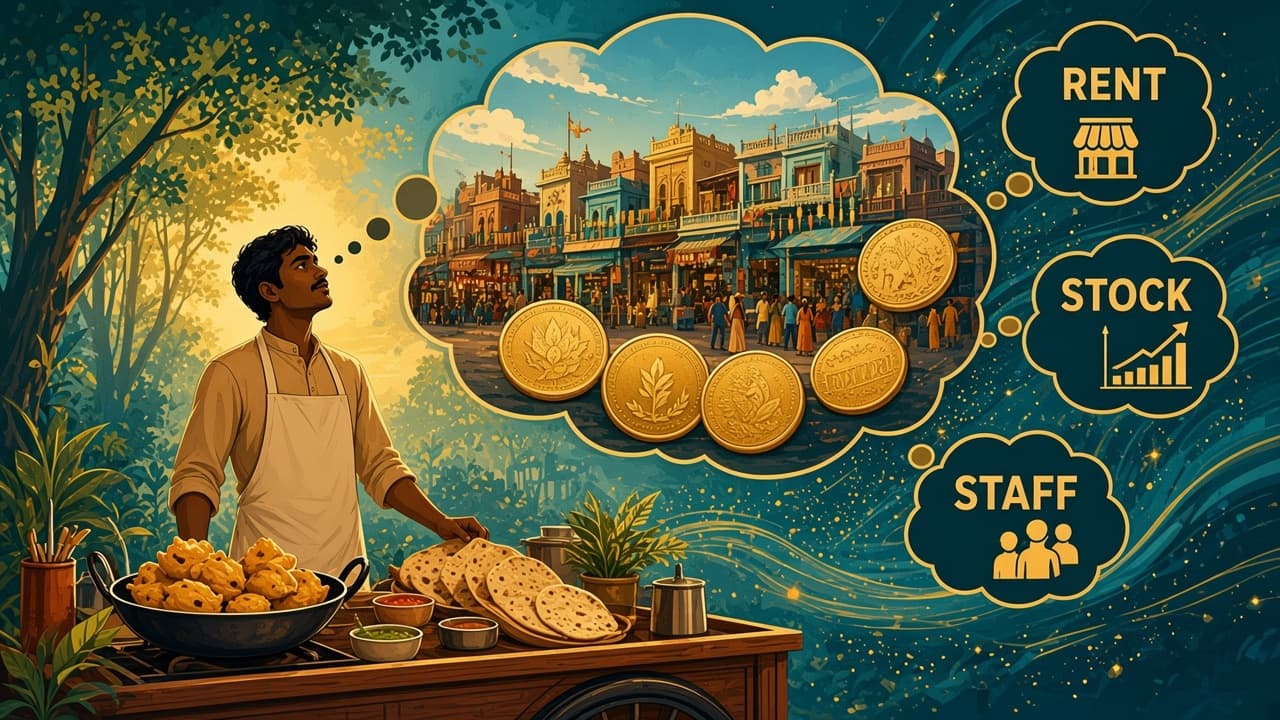
Yesterday we said the share market is a marketplace where people buy and sell small ownership pieces called shares.
That left one itch: if a shop is already busy and loved… why would it ever need so much money?
Let’s stay with that shop.
You know the vada pav wala. One stall. Long queue. Oil hot. Customers happy. He’s doing well.
Then one evening he says something that changes the story:
“I want ten more shops. Same taste. More places.”

Ten shops sounds exciting — until you walk through what has to happen before the next customer buys a single vada pav.
A new shop needs a place. A place means rent (and often a deposit).
Before anyone eats, he must buy stock — potatoes, bread, oil, chutney.
More shops mean more hands, so helpers need wages.
And every kitchen needs tools — stove, vessels, counter — paid for up front.
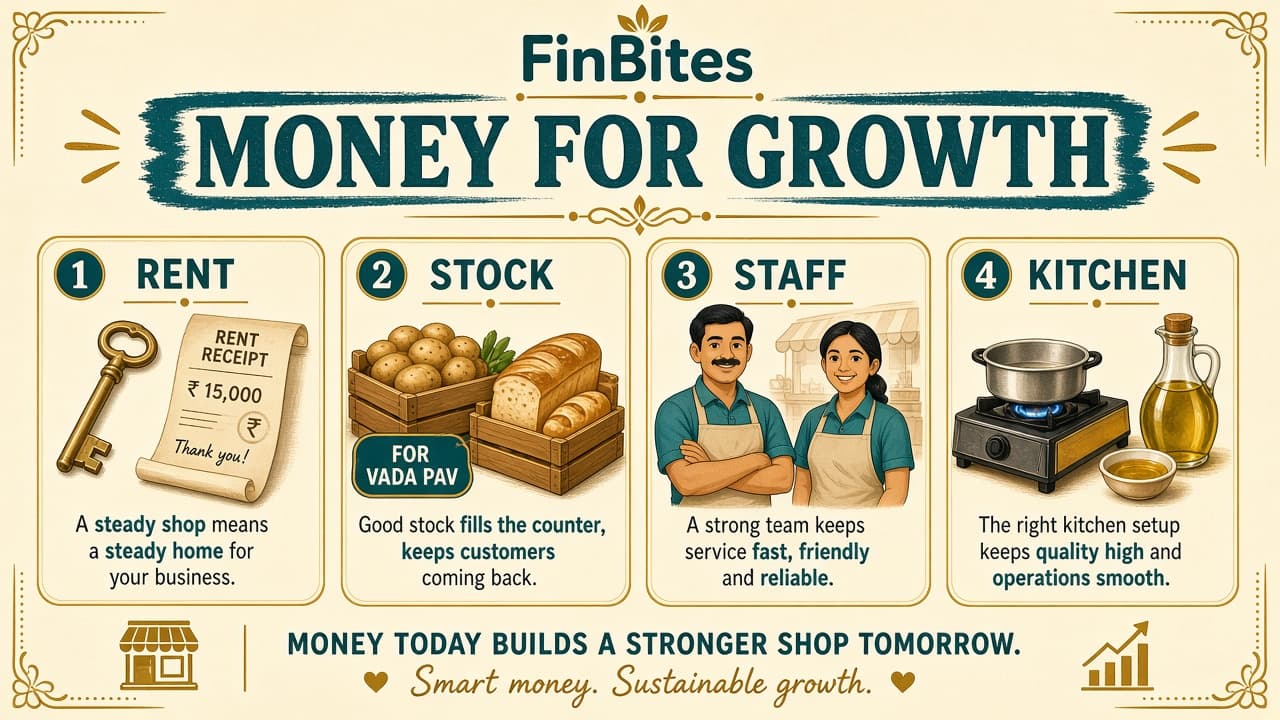
Notice the order: money goes out before money comes in.
Customers pay after the shop is ready. Growth doesn’t wait for the till to fill itself.
Four bills before the rush
1 / 4
1. Rent
New shops need space. Space means rent and deposits.
So this is not “a man with a stall” anymore.
It’s a business trying to grow — people, work, customers, and money moving in and out.
When a business is organised like that, we give it a simple name: a company.
A company can be tiny (one stall with big plans) or huge (many cities).
Different size. Same idea: people + work + money, run as one business.
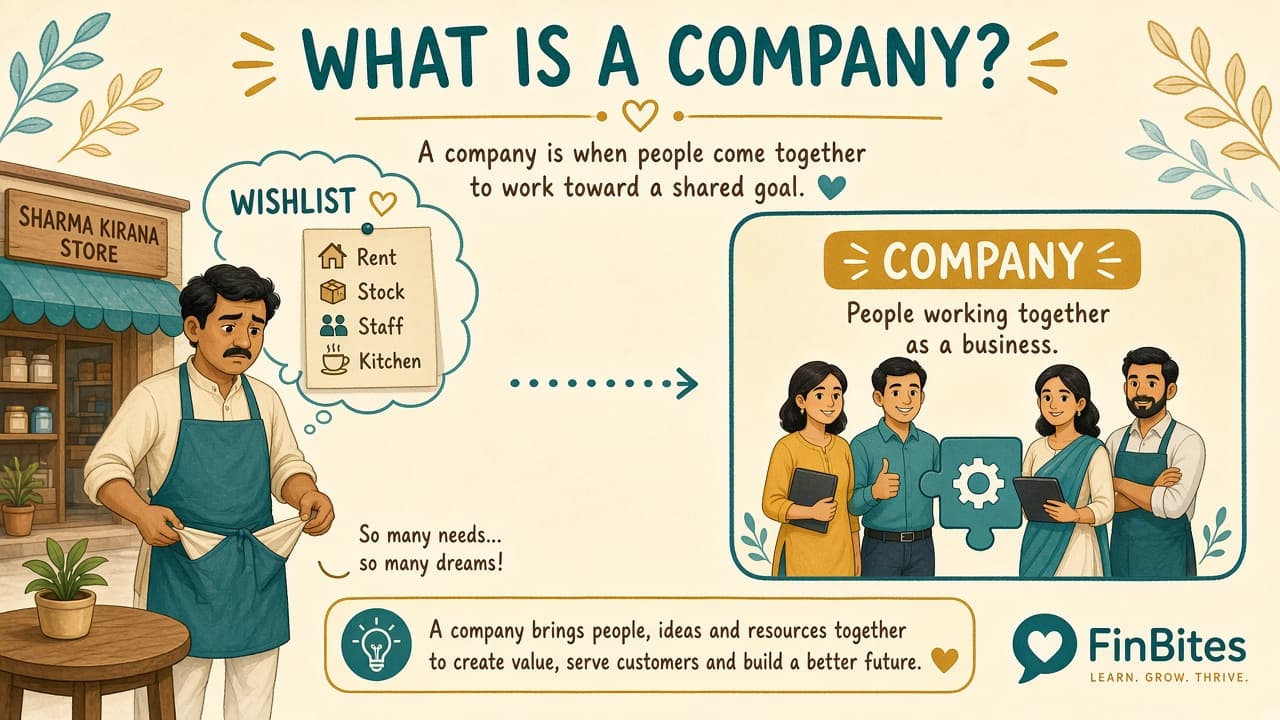
Banks, factories, tech firms? Same story at a larger scale.
They also need money to grow — for spaces, materials, people, and tools — before the next “customer rush” fully arrives.
That’s today’s whole idea. Nothing more.
Today's FinBites
- A company is a business people run together.
- Companies need money to grow, because rent, stock, staff, and tools often must be paid before sales catch up.
We are still not talking about buying shares or which company to pick.
That comes after this foundation.
Found this useful?
Forward it to one person who needs it today — a parent, a friend, a colleague.