Never Enter Your UPI PIN to Receive Money
Scammers send "collect requests" that look like you're receiving cash. Here's the 3-step rule that keeps your bank account safe — forever.
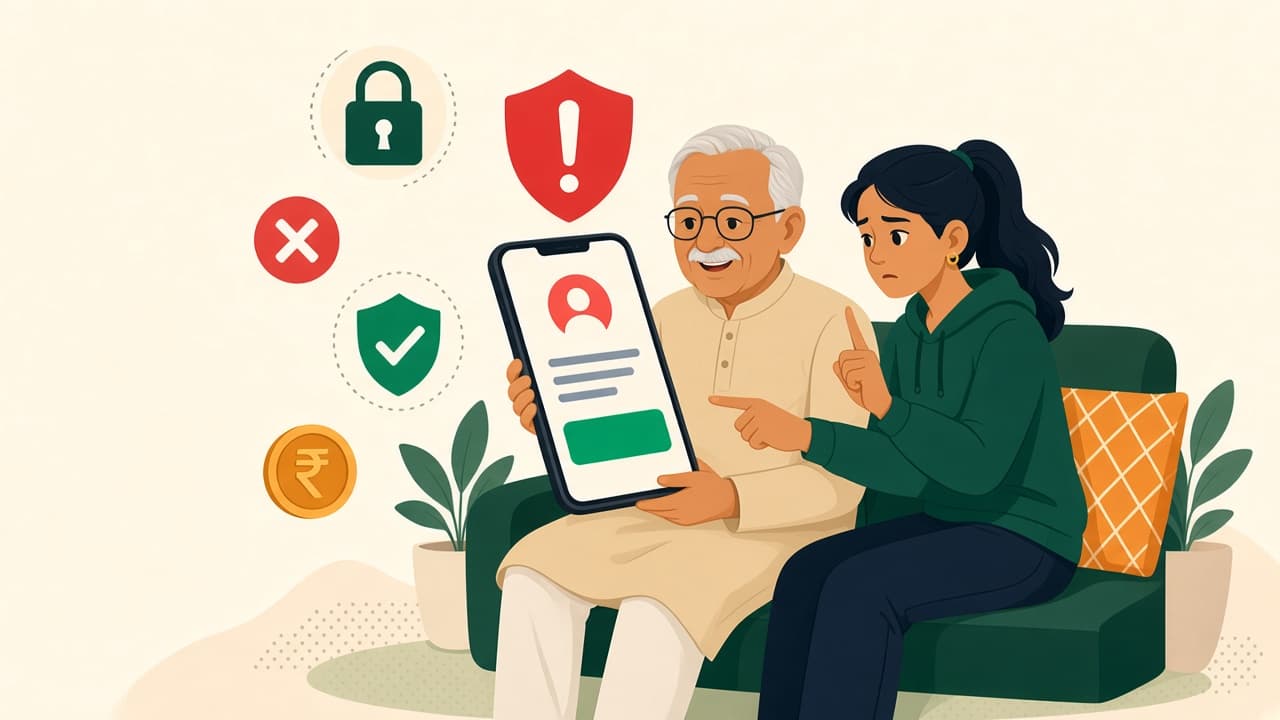
"Sir, I've sent ₹5,000 by mistake to your number. Please accept it and send it back!" — if you've ever received a call like this, you've met one of India's most common UPI scams. The trick is simple: it makes sending money look like receiving money.
The UPI PIN trap
A 40-second story with Dadaji · English + हिंदी
Ramesh ji gets a message: “You've won ₹5,000 cashback!”
रमेश जी को मैसेज आया: “आपको ₹5,000 कैशबैक मिला है!”
PIN = Paying
Your UPI PIN is only ever needed when money leaves your account. Never to receive.
The 3-step UPI safety rule
1 / 3
Receiving money needs NO PIN
When someone genuinely sends you money, it simply lands in your account. You don't tap anything, approve anything, or enter any PIN.
- Salary, refunds, a friend paying you back — all arrive automatically.
- You'll just get an SMS or app notification.
Common versions of this scam
- "Wrong transfer" — a stranger claims they sent money by mistake and asks you to "approve" a refund request.
- OLX / marketplace buyer — the "buyer" sends a QR code to "pay" you for your sofa.
- Fake cashback — an SMS says you've won cashback; just "scan to receive".
- Fake customer care — someone on a "helpline" asks you to enter your PIN to "verify" your account.
"सर, मी चुकून तुमच्या नंबरवर ₹५,००० पाठवले. स्वीकारा आणि परत पाठवा!" — असा कॉल आला असेल, तर भारतातला सर्वात सामान्य UPI स्कॅम तुमच्यापर्यंत पोहोचला आहे. युक्ती सोपी आहे: पैसे पाठवणं हे पैसे मिळणं सारखं दिसतं.
The UPI PIN trap
A 40-second story with Dadaji · English + हिंदी
Ramesh ji gets a message: “You've won ₹5,000 cashback!”
रमेश जी को मैसेज आया: “आपको ₹5,000 कैशबैक मिला है!”
PIN = पैसे देणं
UPI PIN फक्त जेव्हा खात्यातून पैसे जातात तेव्हाच लागतो. मिळवण्यासाठी कधीच नाही.
UPI सुरक्षिततेचे तीन सोपे नियम
1 / 3
पैसे येण्यासाठी PIN लागत नाही
खरेच कोणी पैसे पाठवलं, तर ते आपोआप खात्यात येतात. काहीही टॅप करायचं नाही, मंजूर करायचं नाही, PINही टाकायचा नाही.
- पगार, रिफंड, मित्रानं परत केलेली रक्कम — सगळं आपोआप येतं.
- फक्त SMS किंवा अॅपची सूचना येते.
या स्कॅमचे सामान्य प्रकार
- "चुकून ट्रान्सफर" — अनोळखी व्यक्ती म्हणते पैसे चुकीने गेले, "रिफंड मंजूर करा".
- OLX / मार्केटप्लेस खरेदीदार — "खरेदीदार" तुमच्या सोफ्यासाठी "पेमेंट" म्हणून QR पाठवतो.
- खोटा कॅशबॅक — SMS येतो की कॅशबॅक मिळाला; "स्कॅन करून घ्या".
- खोटी कस्टमर केअर — "हेल्पलाइन" वरून खातं "व्हेरिफाय" करायला PIN मागतात.
Found this useful?
Forward it to one person who needs it today — a parent, a friend, a colleague.