
HRA When Living with Parents: What Salaried Employees Should Understand
Can you live with your parents, contribute towards household expenses, and still qualify for an HRA tax exemption?
Many Indian families live together even after their children start working. Some children contribute towards household expenses, while others pay rent to their parents for living in a family-owned home.
This raises an interesting tax question: can rent paid to your parents qualify for a House Rent Allowance (HRA) exemption?
Let's understand the basic concepts in simple language, without getting lost in complicated tax terminology.
1. What Is HRA?
House Rent Allowance, commonly called HRA, is an allowance that some employers provide as part of an employee's salary to help with housing expenses.
Under applicable tax rules, eligible salaried employees may qualify for an exemption on some of their HRA.
However, receiving HRA does not automatically mean that the entire amount is tax-free. The tax treatment depends on the applicable rules and the employee's circumstances.
2. Can You Pay Rent to Your Parents?
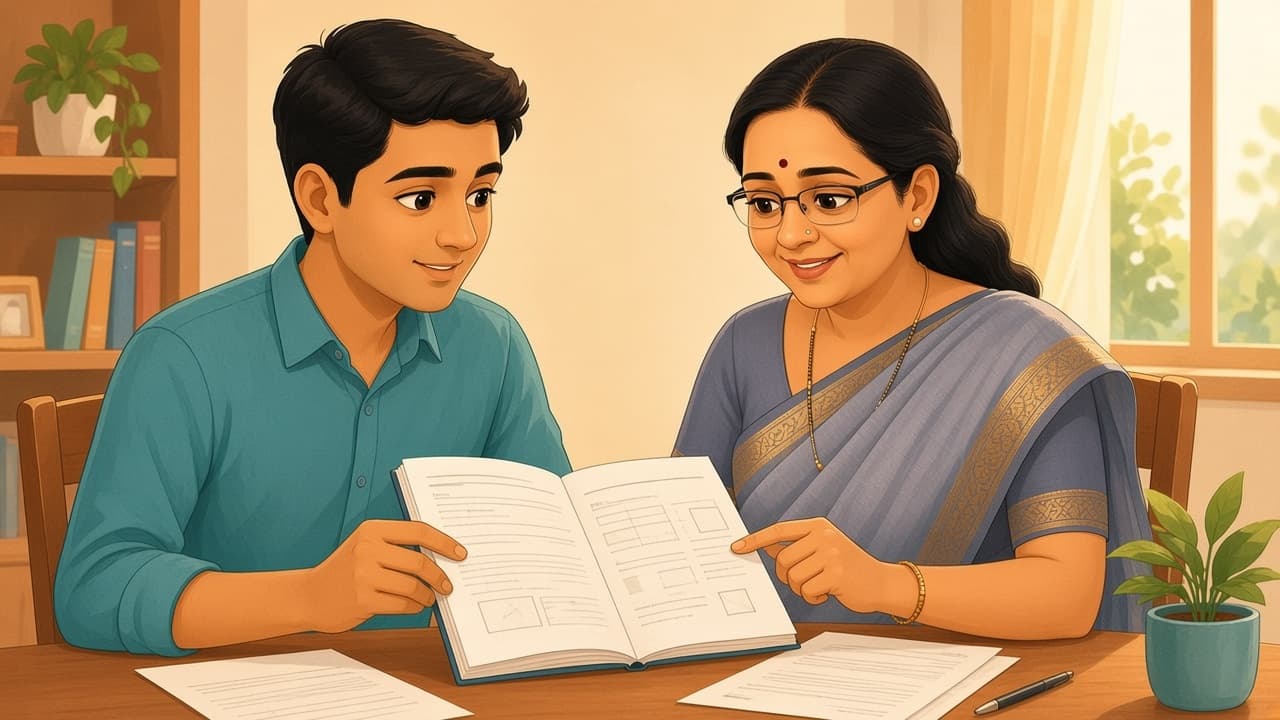
Imagine Rahul works in Pune and lives in a house owned by his mother.
Every month, Rahul pays his mother an agreed amount for living in the house. He also receives HRA as part of his salary.
Rahul wants to understand whether the rent he pays to his mother could qualify for an HRA exemption.
The important point is that living with your parents does not, by itself, determine whether you qualify.
Rent paid to a parent may qualify for an HRA exemption if the arrangement meets the applicable requirements. The relationship between the tenant and the property owner is only one part of the situation.
Simply transferring money to a parent or preparing rent receipts does not automatically establish eligibility.
If you live with your parents without paying rent, you should not automatically treat contributions towards groceries, electricity, or other household expenses as rent.
3. What Should You Understand Before Considering HRA?
Here are some basic concepts worth knowing.
A genuine rental arrangement
The arrangement should reflect what actually happens between the family members. The amount described as rent should represent genuine rent paid for the accommodation.
Creating paperwork or transferring money only to make it appear that rent was paid can create problems.
Property ownership
It is useful to understand who owns the property and who is entitled to receive rent from it.
If the property has multiple owners or the ownership arrangements are complicated, additional questions may need to be considered.
Documents and payment records
Written agreements, rent receipts, and payment records can help document a rental arrangement.
However, no single document guarantees an HRA exemption. The applicable requirements and the actual circumstances matter.
The tax regime you choose
Your tax regime can affect whether HRA exemption is available.
The Income Tax Department's published guidance states that HRA exemption is not available under the new tax regime. Taxpayers considering an HRA claim should check the official rules applicable to their relevant tax year.
You can read the Income Tax Department's guidance on the old and new tax regimes.
4. Does Your Parent Need to Consider the Rent as Income?
Rent received by a parent may have income-tax implications.
The tax treatment depends on the applicable rules and the family's circumstances. Receiving rent does not necessarily mean that tax will be payable, but the income should not automatically be ignored.
The property owner may need to consider how the rental income should be reported in their income-tax return.
This is one reason it is important to understand the situation from both sides: the person paying rent and the person receiving it.
5. A Simple Checklist to Help You Understand Your Situation
Before making any tax declaration, consider these questions:
- Do I actually pay rent to my parent?
- Is there a genuine arrangement for renting the property?
- Do I understand who owns the property?
- Have I maintained appropriate records of the arrangement and payments?
- Have I checked whether my chosen tax regime allows HRA exemption?
- Have I checked the requirements applicable to the relevant tax year?
- Have I considered the possible tax implications for the parent receiving the rent?
- Have I checked the documentation and disclosure requirements applicable to my circumstances?
This checklist is intended to help you identify the questions you may need to investigate. It does not confirm that you qualify for an exemption.
6. Where Can You Learn More?
Tax rules can be complicated, especially when family arrangements are involved.
You can begin by reading the official Income Tax Department website, which provides access to the Income-tax Act, 2025 and the Income-tax Rules, 2026.
If you are unsure how the applicable rules relate to your situation, consider consulting a qualified tax professional.
Avoid relying only on social media posts, online examples, or another person's experience when making a tax declaration.
The FinBites Takeaway
Paying rent to your parents and claiming an HRA exemption is a topic worth understanding, particularly for salaried people living in family-owned homes.
The key lesson is simple: understand the applicable rules before making a tax declaration, keep genuine records, and do not assume that every family arrangement qualifies for a tax benefit.
Learning about tax rules helps you ask better questions and make more informed decisions.
Educational Disclaimer
FinBites shares general financial and tax-literacy information to help readers understand basic concepts. This article is intended for educational awareness only. It is not tax, legal, accounting, or professional advice, and it does not determine whether any individual qualifies for an HRA exemption.
FinBites has not independently verified every legal or tax requirement applicable to individual circumstances. Tax laws, eligibility conditions, and reporting requirements may change. Readers should verify relevant requirements through official government sources and, where necessary, consult a qualified tax professional before making tax declarations or decisions.
FinBites does not guarantee any tax benefit or exemption based on the information in this article.
Found this useful?
Forward it to one person who needs it today — a parent, a friend, a colleague.
© FinBites.org · Educational use only · Do not republish without permission. Terms of Service